The Big Picture
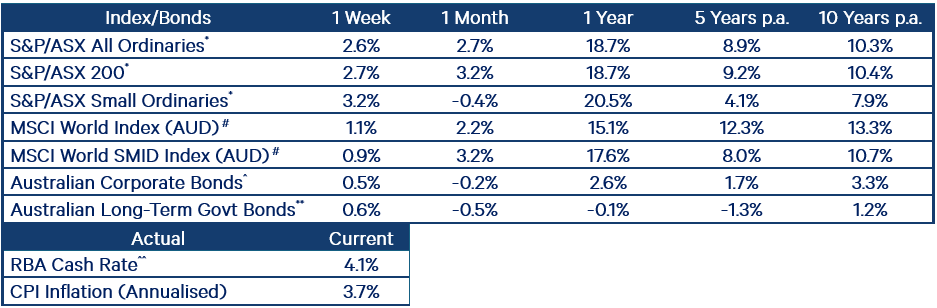
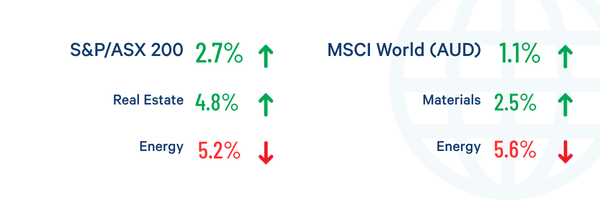
The Australian equity market rallied last week following a US-Iran ceasefire and a decline in oil prices, which boosted investor sentiment. Brent crude oil fell by 12.7% over the week, although it remains more than 30% above pre‑conflict prices.
Domestic consumer confidence edged higher during the week following the federal government’s announcement of a temporary three‑month cut to the fuel excise. Despite the lift, it remains the second-lowest level since records began in 1973.
In the US, enthusiasm around artificial intelligence (AI)‑linked stocks also provided a tailwind for financial markets, with several large‑cap technology and semiconductor companies gaining on continued growth in computing demand, new model releases and ongoing investment in supporting infrastructure. Meanwhile, US consumer sentiment weakened, with the University of Michigan Consumer Sentiment Index falling by 11% to a record low of 47.6 in early April, below market expectations of 52 and 9% lower than a year earlier. Elevated oil prices were also reflected in inflation data, with the US Consumer Price Index (CPI) rising by 3.3% year on year in March, up from 2.4% in February and the fastest rate since May 2024, with a sharp increase in gasoline prices accounting for nearly three‑quarters of the overall rise.
In the week ahead, markets will be watching developments in US-Iran negotiations and the start of the US company earnings season. In Australia, the National Australia Bank (NAB) business confidence survey and the Westpac consumer confidence index will offer insight into sentiment. The labour market is also in focus, with the economy expected to have added around 20,000 jobs in March, while the unemployment rate is expected to hold steady at 4.3%
WAM Global: Insights from Taiwan and Shangha
WAM Global (ASX: WGB) Deputy Portfolio Manager William Liu shares insights from his recent trip to Taiwan and Shanghai, highlighting the evolving semiconductor landscape, China’s push to overcome export controls and its reliance on advanced packaging. He also outlines Marvell Technology’s (NASDAQ: MRVL) pivotal role in AI data centres through interconnects and custom silicon, positioning it to benefit from growing localisation trends. You can watch William’s insights here
Stock Watch
WAM Income Maximiser (ASX: WMX)
In early March, as geopolitical risks intensified in the Middle East, we increased the WAM Income Maximiser (ASX: WMX) investment portfolio’s allocation to debt and reduced exposure to equities, as we saw attractive opportunities to lock in higher levels of income from high‑quality issuers. The debt component of the investment portfolio comprises of investment-grade corporate debt largely issued by Australia’s major banks.
The largest debt position in the portfolio is Commonwealth Bank of Australia Tier 2 subordinated debt, which is paying a fixed coupon of 6.4% and matures in 2046. By comparison, the listed company Commonwealth Bank (ASX: CBA) is currently yielding around 4% on a grossed-up basis (inclusive of dividends), representing a yield gap of approximately 2.4%. Subordinated debt ranks higher than equity in the bank’s capital structure, meaning debt holders are paid before shareholders if a company experiences financial stress. Unlike dividends, which are discretionary, debt coupons are contractually obligated, and returns are based on the issuer’s ability to meet interest payments and repay capital at maturity.
With Australian banks progressively rolling off bank hybrids as part of regulatory changes, issuers have increased their use of Tier 2 subordinated debt to meet capital requirements. This has supported liquidity and pricing in the Tier 2 market and created more opportunities for investors.
For more information on WAM Income Maximiser, you can read our frequently asked questions here.
Tradeweb Markets
Tradeweb Markets (NASDAQ: TW), a leading electronic marketplace, has been a key beneficiary of the recent elevated market and interest rate volatility. In periods of heightened uncertainty and geopolitical instability, institutions utilise its platform to hedge and manage risk. This was evidenced by the company’s strong first quarter 2026 trading volumes with March average daily volume of USD3.8 trillion, up 41.8% year‑on‑year and ahead of market expectations. Over the longer term, the company continues to benefit from a multi‑year structural tailwind as interest rate and credit markets become increasingly electronic.
In the Media

2026 National Shareholder Presentations
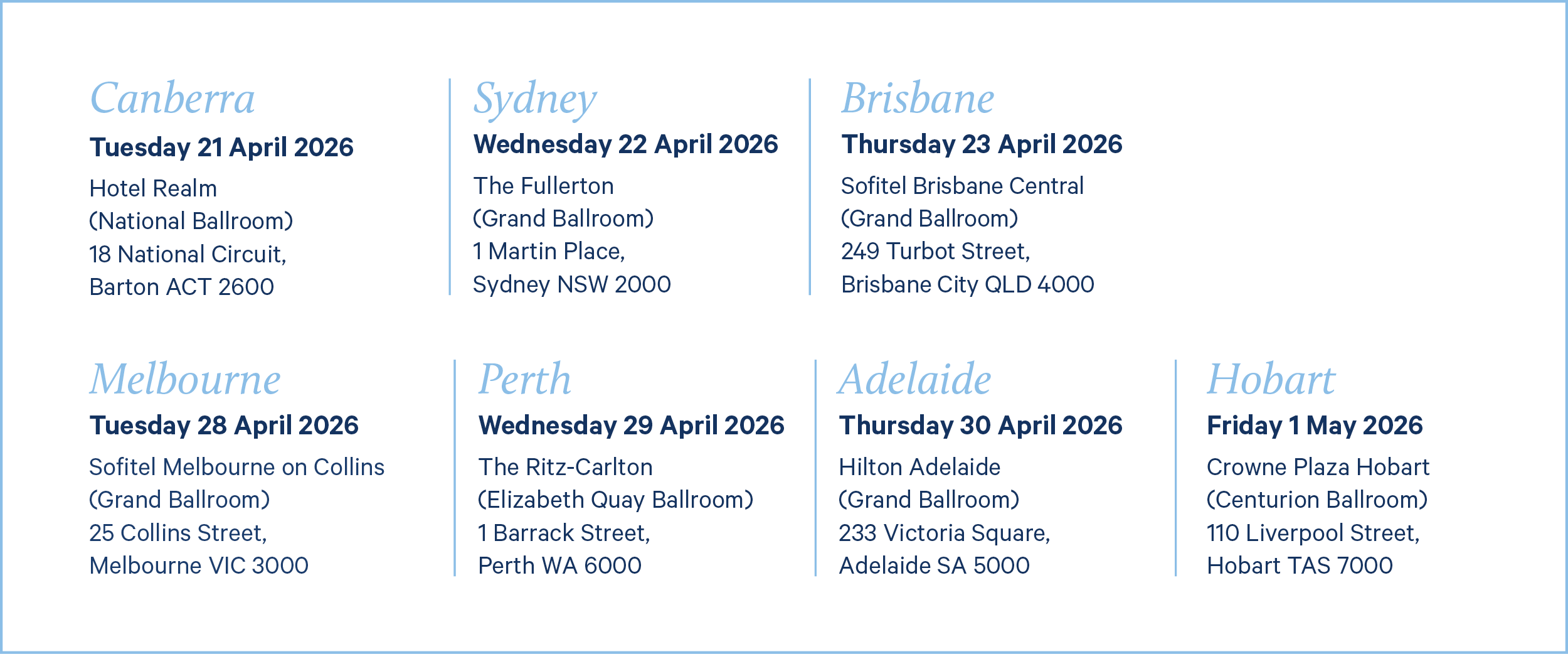
The Wilson Asset Management and Future Generation teams look forward to connecting with shareholders across Australia at the 2026 National Shareholder Presentations. Register here and see below for the event dates.
|
||||||
|